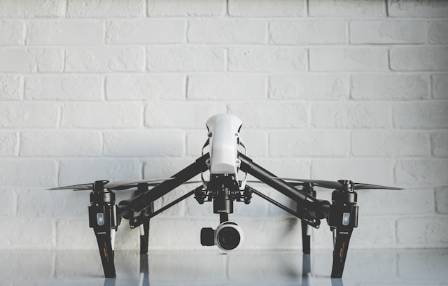
Monday brief
AI Guides Drones in Uncertain Environments
An autonomous drone tasked with dropping water to fight a wildfire in the Sierra Nevada could face powerful, shifting Santa Ana winds that push it off its intended path. Adjusting to these unpredictable disturbances in real time is a major challenge for any flight control system.
Casey Riley
Desk note
Brief tip
The full sticky-note brief continues below on the Monday desk.
Board
Desk Notes
An autonomous drone tasked with dropping water to fight a wildfire in the Sierra Nevada could face powerful, shifting Santa Ana winds that push it off its intended path. Adjusting to these unpredictable disturbances in real time is a major challenge for any flight control system.
To address this, researchers at MIT have created a new adaptive control method powered by machine learning. This system helps drones remain on course by reducing deviations from their planned trajectory, even when facing unstable conditions like strong wind gusts.
Unlike traditional control methods, this approach does not require prior knowledge of the disturbances the drone may encounter. Instead, the system’s AI model learns directly from a small dataset—just 15 minutes of flight observations—to understand and respond to environmental forces.
A key advantage of this method is its ability to automatically choose the most suitable optimization algorithm for the situation. By selecting the best approach based on the nature of the disturbance, the system improves its tracking accuracy.
The researchers achieve this through meta-learning, a technique that trains the system to adapt to a variety of conditions. This allows the controller to learn both how to model disturbances and how to respond to them at the same time.
As a result, the new control system reduces trajectory tracking errors by up to 50% compared to standard methods in simulations, and it performs well even under wind conditions it has not previously encountered.
In the future, this technology could enable drones to deliver heavy packages more reliably in windy environments or monitor wildfire-prone regions more effectively.
“The strength of our method comes from learning multiple components together,” explains Navid Azizan, senior author of the study and a professor at MIT. “With meta-learning, the system can quickly determine the best way to adapt.”
The research team also includes lead author Sunbochen Tang and co-author Haoyuan Sun. Their work was recently presented at the Learning for Dynamics and Control Conference.
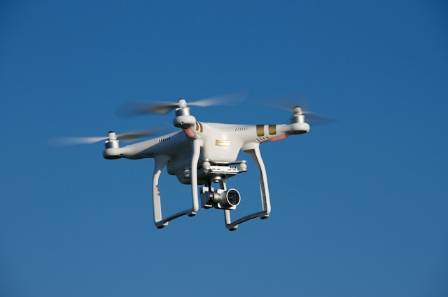
Choosing the Right Algorithm
Typically, drone control systems rely on predefined models that describe both the drone and its environment, including assumptions about possible disturbances. However, in real-world scenarios, these conditions are often too complex to predict in advance.
Many systems use an optimization method called gradient descent to estimate unknown variables and maintain stability. However, gradient descent is just one option within a broader class known as mirror descent methods.
“Mirror descent includes a range of algorithms, and some are better suited to specific problems than others,” Azizan explains. “Our system automatically determines which one works best.”
To do this, the researchers replaced traditional disturbance models with a neural network that learns directly from data. This removes the need to predefine how wind or other forces behave.
At the same time, the system evaluates multiple mirror-descent functions and selects the one that best fits the current situation, improving overall performance.
Learning to Adapt
Although wind conditions may vary from flight to flight, the system’s learned components—its neural network and optimization strategy—remain consistent, avoiding the need for retraining each time.
To make the controller adaptable, the team used meta-learning to expose it to a wide range of simulated wind scenarios during training. This helps the system develop a generalized understanding of different disturbance patterns.
“Our approach builds a shared representation across many scenarios, allowing efficient adaptation,” Tang explains.
During operation, the user simply inputs a desired flight path. The system then continuously adjusts the drone’s thrust in real time to keep it as close as possible to that path, even as conditions change.
Tests in both simulations and real-world experiments showed that this method significantly outperformed existing approaches across all tested wind conditions.
“Even when the system encounters stronger disturbances than those seen during training, it still performs effectively,” Azizan notes.
Interestingly, the performance gap between this method and traditional systems increases as wind intensity rises, highlighting its strength in challenging environments.
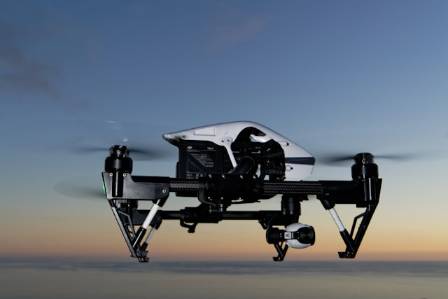
Future Directions
The research team is now testing the system on physical drones under varying environmental conditions. They also plan to expand its capabilities to handle multiple simultaneous disturbances.
For example, shifting winds could cause a drone’s payload to move during flight—especially if it is carrying liquids—introducing additional instability.
Another goal is to incorporate continuous learning, enabling the system to adapt to new conditions without retraining on previous data.
Babak Hassibi, a professor at Caltech who was not involved in the study, praised the work:
“This research combines meta-learning with traditional adaptive control in a powerful way. The use of mirror descent allows the system to automatically align with the problem’s structure, making it highly effective for complex, uncertain environments.”
This project received support from organizations including MathWorks, the MIT-IBM Watson AI Lab, the MIT-Amazon Science Hub, and the MIT-Google Program for Computing Innovation.
More from this board
NOTE · en

7 Fascinating Design Secrets of Singapore’s Garden by the Bay
Singapore’s Garden by the Bay is more than a park—it’s a futuristic blend of landscape artistry, advanced technology, and sustainable innovation. Opened in 2012, this 101-hectare oasis has become one of the nation’s most celebrated attractions, drawing millions of visitors annually. Here are seven design highlights that reveal why it remains such a global icon.
NOTE · en

The Most Insanely Beautiful Coastlines in the World
Big Sur is best experienced from the driver’s seat, where winding turns along its rugged Pacific Coast Highway reveal dramatic cliffs and endless ocean views. This iconic stretch between Los Padres National Forest and the Ventana Wilderness offers striking coastal scenery, with memorable stops such as the cliffside Nepenthe restaurant and the rustic Deetjen’s Big Sur Inn.
NOTE · en

Understanding Bichon Frise Traits and How to Care for Them
The Bichon Frise is a small non-sporting dog breed with long, curly white fur that makes its dark eyes and nose stand out prominently. Many people describe Bichons as fluffy as cotton balls, often comparing them to “living stuffed animals.” These dogs are energetic and people-focused, disliking being left alone for extended periods. One of their favorite places to be is usually curled up in their owner’s lap, enjoying close companionship.
NOTE · en
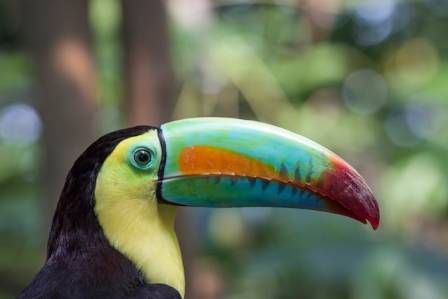
The Bird with the Rainbow Beak and Its Vibrant World
Picture us wandering through a dense, green rainforest, sunlight filtering through the canopy, and suddenly, there it is—the star of our journey: a toucan perched gracefully on a branch.
NOTE · en

The Best 7 Storage Furniture Pieces
Anyone living in a relatively compact home knows how much smart storage can improve everyday life. When storage is planned well, it makes everything easier to find and gives every item a logical place. When it is poorly designed—or missing altogether—it can quickly become a daily source of annoyance.
NOTE · en

Meerkat (Suricata suricatta): A Deep Dive into the Life of a Fascinating Social Mammal
The meerkat (Suricata suricatta) is a small, charismatic mammal renowned for its upright vigilant posture and intricate social behaviors. Native to the arid regions of southern Africa, this member of the mongoose family (Herpestidae) thrives in harsh desert environments, showcasing remarkable adaptability and cooperation. From their specialized physical traits to their tight-knit group dynamics, meerkats offer a compelling example of how teamwork and evolutionary adaptations enable survival in challenging habitats. This article explores their scientific classification, physical characteristics, habitat, behavior, diet, reproduction, predators, conservation status, evolutionary history, relationship with humans, and unique quirks.